
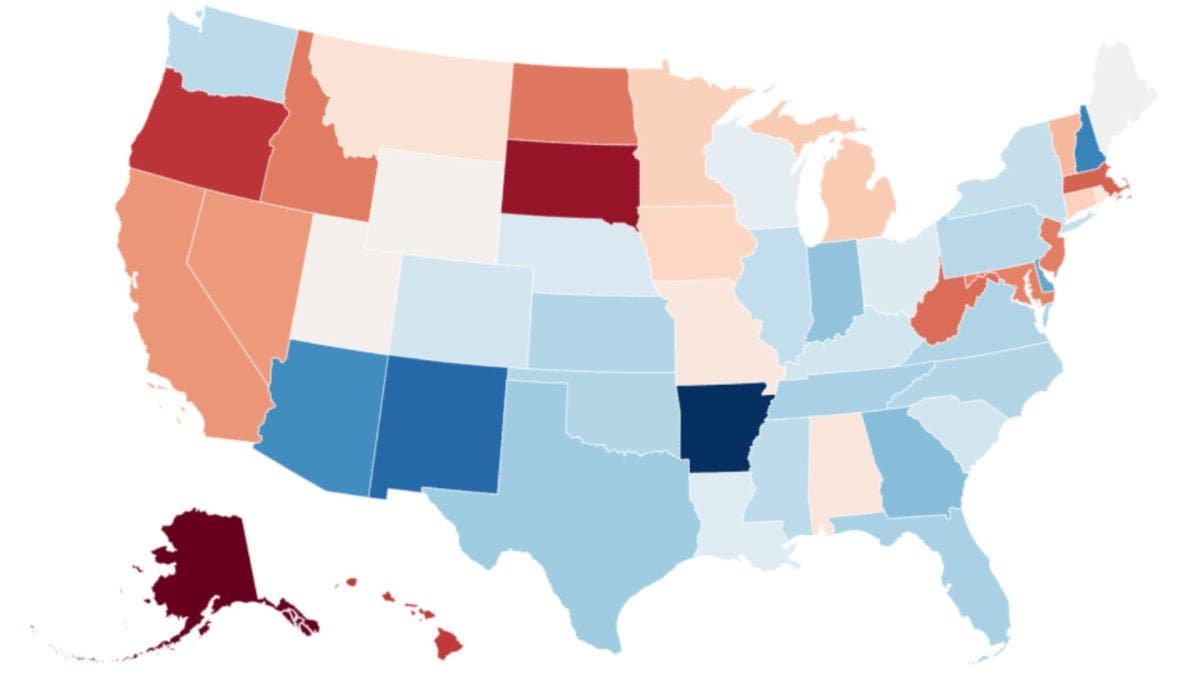
Health insurers across the country have been proposing particularly high premium rate increases for 2026 Affordable Care Act (ACA) marketplace plans, according to two health policy research organizations.
The range of requested rate changes varied from cost reductions, as low as -10 percent, to price hikes as high a 59 percent, while the average proposal was an increase between 12 to 27 percent, says data from the ‘Health System Tracker’ put together by the Peterson Center on Healthcare and KFF.
Coleman Drake, a professor in the Department of Health Policy and Management at the University of Pittsburgh, Pennsylvania, told Newsweek: “Increases in premiums caused by the expiration of enhanced subsidies will cause millions of marketplace enrollees to become uninsured because they will no longer be able to afford health insurance. These coverage losses will be largest among lower income enrollees, as they are the most sensitive and vulnerable to premium increases.”
Why It Matters
There are many factors behind the rising costs of health insurance premium rates, and this also follows what has been an ongoing trend in recent years, as both the increasing price of care and uptick in health care use have influenced premium rates.
Inflation is another factor, as is labor costs, as providers are seeking higher reimbursement rates in negotiations, due to elevated staff costs and continued difficulties and strain following the COVID-19 pandemic.
The growing demand of GLP-1 drugs like Ozempic and Wegovy, used for diabetes treatment and weight loss, have also increased prescription drug spending.
What To Know
Arkansas was the state with the highest proposed range of premium rate increases, having both the highest proposed rate increase overall, at 59 percent, but also the highest range of proposed increases, with the lowest requested increase at 42.5 percent.
Paul Shafer, a professor of health law, policy, and management and co-director of the Medicaid Policy Lab at Boston University, told Newsweek that this was likely because Arkansas is making “a large adjustment to how it prices in cost-sharing reductions for lower income enrollees and faces special circumstances because its ‘private’ Medicaid expansion is tied into Marketplace plans.”
“The premium changes depend on lot on local dynamics—how competitive the hospital market is, and how many and what kind of people are enrolling in the Marketplace in each state,” he said.
Other states with some of the highest proposed premium rate increases for ACA marketplace plans included New Mexico (53 percent), New Hampshire (50.1 percent) and Arizona (49 percent).
Of the all the states, Alaska’s highest proposed premium rate increase was the lowest, at 5.3 percent, followed by South Dakota (8.9 percent), and Oregon (12.5 percent).
While 125 health insurers proposed premium increases of at least 20 percent, there were four health insurers that actually proposed reductions in premium rates.
These health insurers were in Pennsylvania, where a health insurer proposed a reduction of 10 percent in premium costs, Kansas (6.1 percent reduction), Missouri (4.4 percent reduction) and Alaska (0.8 percent reduction).
This could be because Pennsylvania’s ACA Marketplace has “more competition than many other states, with multiple insurers rivaling each other in the same county. Notably, Pennsylvania has a robust state reinsurance program that stabilizes premiums,” Ge Bai, a professor of health policy and management at Johns Hopkins Bloomberg School of Public Health, Maryland, told Newsweek.
“The reason that we are seeing such high variation in rate changes is that both state regulators and insurers are facing large uncertainty regarding the policy environment in the marketplaces next year,” said Drake.
This, coupled with the expiration of the expanded premium subsidies, which he said may “cause large reductions in enrollment,” have “large effects on insurers’ bottom lines.”
He added that this has been magnified by other policy changes, and some insurers have responded by “pulling out of the marketplaces, while others have raised premiums.”
Jonathan Gruber, a professor of economics at Massachusetts Institute of Technology, told Newsweek that the “degree of competition on the exchanges” is another key reason for the differences, alongside the effort states put in to manage the premiums that are charged.
“States with very active management and lots of competition on the exchanges will see the lowest increases,” he said.
While the vast majority of ACA marketplace enrollees, around 92 percent in 2025, receive a subsidy, meaning they would likely not experience these premium increases depending on their plan under usual circumstances, as enhanced premium tax credits are set to expire in 2026, this means financial assistance across the board for all subsidized enrollees will likely decrease.
This could lead to more than 75 percent increases in out-of-pocket premium payments, according to the information on the Health System Tracker website run by Peterson and KFF.
What People Are Saying
Drake told Newsweek: “Increases in premiums caused by the expiration of enhanced subsidies will cause millions of marketplace enrollees to become uninsured because they will no longer be able to afford health insurance. These coverage losses will be largest among lower income enrollees, as they are the most sensitive and vulnerable to premium increases. Many enrollees who stay insured will respond to premium increases by switching to less generous coverage that makes them more vulnerable to catastrophic medical expenses. Lastly, enrollees that decide to keep their current coverage will have to dedicate a larger portion of their incomes to purchasing the same coverage. Premium increases will be particularly large for enrollees with incomes above four times the poverty level since they will lose access to premium subsidies entirely.”
Shafer told Newsweek: “Insurers are having to give themselves latitude to absorb lots of potential uncertainty and the impact of rising health care costs, inflation, provider consolidation, and use of expensive medications, like GLP-1s, varies by state and plan. Insurers are having to make educated guesses about all of these factors ahead of time in order to price their plans.”
He added: “The premium increases will affect those who don’t receive Marketplace subsidies the most, as they bear the full cost of their plans. Those eligible for financial help have their premiums capped as a percentage of income so they will be insulated a bit more, although the enhanced subsidies passed under President Biden are scheduled to expire at the end of 2025 unless Congress renews them. As premiums rise, younger and healthier people may be less likely to sign up, leaving plans with enrollees who are more expensive to cover. Some will opt for less generous plans that have higher deductibles and out-of-pocket costs, which can discourage seeking care and lead to worse health.”
Bai told Newsweek: “The premium rate changes will affect Americans with incomes above 400 percent of the federal poverty level who have been receiving COVID-era ACA premium subsidies. If these subsidies expire as scheduled in December 2025, these individuals will face the full cost of their ACA plans, which have been made affordable through taxpayer subsidies. The resulting sticker shock would incentivize them to seek more affordable alternatives, such as high-deductible, low-premium plans paired with HSAs (health saving accounts), direct primary and specialty care, association plans, health-share ministries, or crowd-sharing arrangements, creating powerful market forces that drive innovative affordable delivery and payment models.”
What Happens Next
Premiums for ACA marketplace plans are expected to significantly increase for some in 2026, although different plans and states will be impacted to varying degrees.
Update 10/03/25, 04:08 a.m. ET: This article was updated with comment from Ge Bai.
link